Office aesthetics play a crucial role in shaping employee morale. Many organizations overlook this aspect, focusing more on functionality than appearance. However, the environment where employees work can significantly influence their mood and productivity. Why does office aesthetics impact employee morale?
Research shows that well-designed spaces boost creativity and reduce stress. Bright colors and natural light create positive energy, while cluttered or dull environments can be demotivating. Employees often feel more valued and engaged in visually appealing settings. This raises the question: are companies doing enough to ensure a positive atmosphere?
Moreover, personal touches in the workspace can lead to increased happiness. Employees appreciate elements that reflect their personalities. While aesthetics are subjective, striking a balance is vital. Some organizations may create stylish environments that fail to resonate with their teams. Thus, a deeper understanding of what employees desire is essential. Reflections on office design must consider how it aligns with employee well-being and overall company culture.
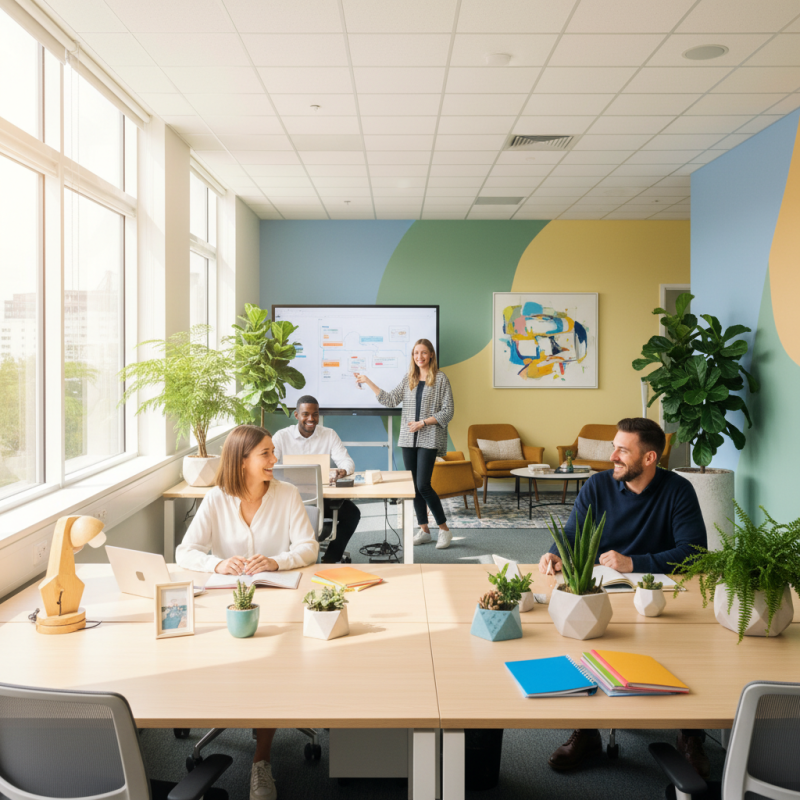
Office aesthetics play a vital role in modern workplaces. Research shows that a well-designed office can boost employee productivity by up to 20%. Bright colors and natural light can enhance creativity. Employees often feel more motivated when surrounded by an inspiring environment.
However, many companies overlook the importance of design. A survey found that 30% of employees consider their workplace uninspiring. This lack of attention to aesthetics can lead to decreased morale. Plants, art, and open spaces can create a more inviting atmosphere. Yet, some businesses still opt for bland, generic designs.
Employee feedback is crucial in this context. Listening to employees about their environment can directly impact job satisfaction. Simple changes, like rearranging furniture or adding personal touches, can make a difference. Investment in aesthetics does not always require a large budget. Small changes can yield significant results. Ultimately, a vibrant office fosters a positive workplace culture and empowers employees.
Office design plays a crucial role in shaping employee well-being. Natural light, for instance, can significantly boost mood and productivity. Studies have shown that employees with access to natural light report a 51% drop in drowsiness. Incorporating plants can have a similar impact. Research indicates that greenery lowers stress levels and improves overall job satisfaction.
Color schemes in the office also influence morale. Warm colors, like orange and yellow, can energize workers, while cooler tones, such as blue, promote calmness. It’s essential to strike a balance; too much of any color can lead to distraction. Additionally, open spaces can encourage collaboration but may also lead to noise issues. Employees often find it hard to concentrate in chaotic environments.
Ergonomics is another key element. Poorly designed furniture causes discomfort, which can affect focus. A report from the Occupational Safety and Health Administration noted that companies investing in ergonomic office furniture see a 20% increase in productivity. While many organizations aim to improve aesthetics, there is often a gap in addressing employee feedback. Regular assessments can help bridge this gap, ensuring that design choices align with employee needs.
| Design Element | Impact on Employee Morale | Employee Satisfaction Rating (%) |
|---|---|---|
| Natural Lighting | Increases mood and productivity | 85 |
| Color Scheme | Enhances creativity and energy | 78 |
| Ergonomic Furniture | Reduces discomfort and fatigue | 90 |
| Open Layout | Fosters collaboration and communication | 75 |
| Green Spaces | Promotes relaxation and reduces stress | 88 |
Color and lighting play a crucial role in shaping office environments. Studies reveal that color can influence mood and productivity significantly. For example, blue hues are linked to calmness and focus, while yellow can enhance creativity. A survey by the University of Texas found that employees in blue offices reported a 15% increase in overall satisfaction.
Lighting also affects employee morale. Natural light improves mood and energy levels. A report from the World Green Building Council shows that workplaces with ample natural light can boost employee productivity by up to 18%. However, many offices still rely heavily on artificial lighting, leading to fatigue and discomfort. Dimly lit spaces can cause headaches and reduce attention spans.
Yet, not all employees respond the same way to these elements. Individual preferences vary widely. Some may feel energized by bright colors, while others may prefer neutral tones. Creating a space that caters to diverse tastes is a challenge. Balancing aesthetics with functionality requires ongoing adjustments and feedback from employees.
The layout and space utilization of an office significantly impact employee interactions and morale.
Open floor plans can encourage collaboration but also may lead to distractions. According to a report by the Haworth Institute,
70% of employees feel less productive in open spaces.
This highlights the delicate balance between fostering teamwork and providing a space for focused work.
Designing spaces with designated areas for both collaboration and quiet work can enhance satisfaction.
Having informal meeting spots can create opportunities for spontaneous discussions.
It’s essential to consider the psychology behind space.
A well-organized office with appropriate furniture affects mood and boosts creativity.
A survey by Steelcase found that employees who love their workspace are
12% more productive.
Tips:
Office aesthetics play a crucial role in shaping employee morale. Research shows that a well-designed workspace can boost productivity significantly. For instance, a study by the Human Spaces report found that 58% of employees claim their productivity improves in aesthetically pleasing environments. Natural light, green plants, and art contribute to this positive effect.
Companies that have made aesthetic improvements see notable benefits. At a tech firm, introducing vibrant colors and open spaces led to a 15% increase in employee happiness scores. Employees reported feeling more motivated and engaged. Yet, not every aesthetic change has a positive impact. Overly cluttered or distracting designs can lead to decreased focus and productivity. Some employees felt overwhelmed by excessive decorations.
Creating a balance is essential. While aesthetics can uplift spirits, they should not become overwhelming. Companies must consider employee feedback in aesthetic decisions. The relationship between aesthetics and morale is complex, requiring thoughtful approaches to design.
: Color significantly influences mood. For instance, blue promotes calmness, while yellow enhances creativity.
Natural light boosts mood and energy. Offices with it can increase productivity by up to 18%.
No, responses vary. Some prefer bright colors, while others favor neutral tones.
Open layouts encourage collaboration, but 70% of employees find them distracting and less productive.
Design spaces for collaboration and quiet work. This balance increases overall job satisfaction.
Informal spots foster spontaneous discussions. They enhance employee interactions and lead to creativity.
A well-organized office affects mood and productivity. It can boost creativity significantly.
Creating zones for different activities and using soundproofing materials can enhance morale.
Employees may not always articulate needs. Reflection on design processes is crucial for discovery.
The balance between aesthetics and functionality is key. Ongoing feedback from employees is essential.
The aesthetics of an office play a crucial role in shaping employee morale, making it a vital consideration for modern workplaces. Why does office aesthetics impact employee morale? Key elements such as color, lighting, and layout significantly influence how employees perceive their environment and interact with one another. For instance, warm colors and adequate natural light can boost mood and productivity, while thoughtful spatial designs can facilitate collaboration and communication.
Additionally, real-world examples demonstrate how aesthetic improvements lead to notable increases in employee satisfaction and morale. Companies that invest in creating visually appealing and functional workspaces not only enhance their employees' well-being but also promote a positive organizational culture. In essence, the design of an office environment directly correlates with employee engagement and overall workplace happiness.

Vant Furniture