Choosing a durable office desk requires more than selecting an attractive finish. It means matching materials to daily pressure, cleaning routines, room conditions, and budget. A desk that looks solid in a showroom may develop swelling, edge damage, or wobbling after a year of heavy use. What are the best materials for durable office desks? The practical answer depends on how the desk will be used.
Solid hardwood remains a trusted choice for executive offices and long-term workspaces. Oak, maple, and beech resist everyday wear when properly sealed. Their grain also creates a warm, stable surface. However, wood can expand with humidity and develop scratches. It is durable, not indestructible. High-pressure laminate over a quality core offers strong resistance to stains, impact, and frequent cleaning. It often suits shared offices better than expensive timber. Steel frames add valuable stability, especially for wide desks holding monitors, printers, and paperwork. Yet thin metal can bend, and poor coatings may chip or rust in damp rooms.
Engineered wood, such as plywood or medium-density fiberboard, can perform well when edges are sealed and cores are dense. Particleboard is more variable. Some low-cost versions fail quickly around screws or exposed corners. Materials alone do not guarantee longevity. Check panel thickness, edge banding, fasteners, finish quality, and the manufacturer’s warranty. Independent furniture standards and clear care instructions provide useful evidence. I would not choose from a material label alone. Construction details often decide the result. A careful comparison can help you select a desk that stays steady, attractive, and practical through years of ordinary work.
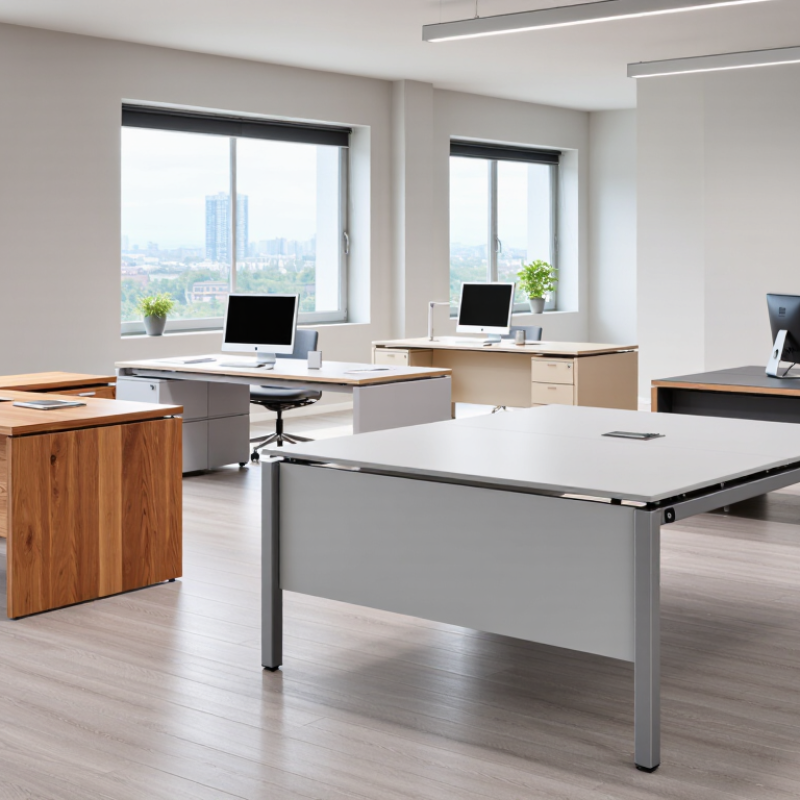
A durable office desk must handle daily pressure, not just look solid in a showroom. Define its expected load first, including monitors, files, lamps, and occasional leaning. A stable frame should resist rocking when someone types quickly or adjusts a chair. Check the joints carefully. Tight connections matter more than impressive surface thickness.
The work surface needs resistance to scratches, heat, moisture, and repeated cleaning. A sealed, dense material usually performs better near coffee cups and windows. Rounded edges reduce impact damage and feel more comfortable during long work sessions. Cable openings should have reinforced borders, because thin cutouts can weaken over time. Measure the desk height against the user’s chair and monitor position.
I once focused too much on a heavy desktop and ignored the frame. That was a mistake. Weight alone does not prove durability. Look for clear load information, replaceable hardware, and surfaces that can be repaired instead of discarded. A desk used in a busy office also needs easy cleaning and consistent quality across panels. Test it in person if possible. Push the corners, inspect the underside, and open every drawer. Small flaws often appear there. Durability is partly material choice, but it also depends on construction, maintenance, and realistic daily use.
| Material or Component | Typical Durability Strengths | Moisture and Heat Resistance | Scratch and Impact Performance | Maintenance Requirements | Recommended Use | Overall Suitability for a Durable Office Desk |
|---|---|---|---|---|---|---|
| High-Pressure Laminate (HPL) | Dense, wear-resistant surface suitable for frequent daily office use. It is bonded to a stable core to create a practical worktop. | Good resistance to brief contact with moisture and normal office temperatures. Seams and exposed edges still require protection. | Good resistance to routine scratches, abrasion, and moderate impacts. Sharp objects can still damage the surface. | Clean with a soft cloth and mild detergent. Avoid abrasive powders, flooding, and prolonged standing water. | Shared workstations, reception desks, meeting tables, and high-use office areas. | |
| Melamine-Faced Particleboard | Provides a cost-effective, uniform surface when manufactured with a sufficiently dense core and well-sealed edges. | The melamine surface resists normal spills, but swelling can occur if water reaches unsealed edges, joints, or damaged areas. | Good for everyday office work; edges are more vulnerable to chipping and impact than the central surface. | Keep edges dry, wipe spills promptly, and inspect joints and edge bands periodically. | General office desks where budget, consistent appearance, and moderate use are priorities. | |
| Medium-Density Fibreboard (MDF) with Protective Finish | Offers a smooth, dimensionally consistent base for paint, veneer, or laminate. Its performance depends strongly on the finish and edge sealing. | Moderate resistance. Unsealed or cut edges may absorb moisture and swell. | Good surface smoothness, but corners and edges may dent under concentrated impact. | Use coasters and desk mats where appropriate; repair damaged finishes before moisture enters the board. | Executive-style desks, curved components, and designs requiring a smooth painted or veneered surface. | |
| Solid Hardwood | Strong, repairable, and capable of lasting for many years when properly dried, constructed, and supported. | Moderate to good resistance depending on the wood species and finish. Changes in humidity can cause movement, joints to open, or panels to warp. | Good impact tolerance and repairability, although the surface may develop dents and marks that require refinishing. | Control indoor humidity, wipe spills quickly, and periodically maintain the protective finish according to its condition. | Premium private offices, boardrooms, and desks designed for long service life and refurbishment. | |
| Veneered Engineered Wood | Combines a stable engineered-wood core with a real-wood surface. Stability is usually more consistent than a wide solid-wood panel. | Good when all edges and joints are properly sealed; prolonged moisture can damage the veneer or core. | Good appearance and everyday performance, but thin veneer can be difficult to repair after deep scratches. | Use non-abrasive cleaners and avoid excessive water, heat, and direct sunlight. | Professional offices requiring a natural-wood appearance with improved dimensional stability. | |
| Powder-Coated Steel Frame | Provides high structural strength, excellent load support, and strong resistance to flexing when correctly engineered. | Good resistance to normal indoor humidity. Scratches that expose bare metal may lead to corrosion in damp environments. | Very good resistance to impact and abrasion; coating quality and thickness affect long-term performance. | Clean with a damp cloth and repair deep coating damage. Keep fasteners tight during scheduled inspections. | Height-adjustable desks, heavy-use workstations, and desks requiring a rigid supporting structure. | |
| Aluminum Frame | Lightweight, naturally corrosion-resistant, and suitable for modular or movable desk systems. | Very good resistance to humidity and normal office moisture. Surface finishes may still be marked by chemicals or abrasion. | Good corrosion resistance but lower stiffness than steel at the same section size; design and profile thickness are important. | Wipe clean with mild detergent and avoid harsh alkaline or abrasive cleaners. | Mobile desks, collaborative work areas, and environments where low weight and corrosion resistance matter. | |
| Compact High-Pressure Laminate Worktop | Dense, non-porous construction offers strong resistance to wear and does not rely on a thick wood-based core. | Very good resistance to moisture and suitable for areas where frequent cleaning is expected. Joints and penetrations must still be sealed. | Very good resistance to abrasion, impact, and everyday staining. | Simple cleaning with a soft cloth and mild detergent; avoid cutting directly on the surface. | Hot-desking areas, training rooms, healthcare administration spaces, and high-traffic offices. | |
| Edge Banding and Joint Sealing | Although not a main panel material, durable edge protection prevents impact damage and limits moisture entry into the core. | Sealed edges significantly improve resistance to spills; poorly bonded or damaged edges can become failure points. | Thick, securely bonded edge bands protect corners from routine knocks and abrasion. | Inspect corners, cable openings, and joints regularly; repair lifting or chipped edge sections promptly. | All wood-based desk panels, especially desks used in shared or high-traffic environments. | |
| Adjustable Leveling Feet and Reinforced Hardware | Reliable hardware maintains frame stability, reduces movement, and helps prevent stress damage to the worktop and joints. | Metal hardware should have a corrosion-resistant finish, particularly in humid indoor environments. | Strong brackets, inserts, and fasteners improve resistance to repeated assembly, vibration, and lateral loads. | Check fastener tightness and leveling periodically, especially after relocation or repeated height adjustment. | Any desk expected to support monitors, equipment, frequent repositioning, or height adjustment. |
High-pressure laminate usually resists coffee, pen marks, and repeated wiping. Sealed edges matter. Untreated veneer needs gentler care.
Request abrasion and chemical-resistance test results. Check the cleaning agents, contact time, temperature, and visible damage recorded.
No. A 25-millimeter panel may still wobble with weak fasteners or narrow feet. Check deflection, joint strength, and racking resistance.
Scratch-resistant laminate is practical for bags, keys, and frequent contact. Choose a matte texture if minor marks concern you.
Sealed laminate and powder-coated steel usually handle spills and frequent wiping. Solid wood can work, but exposed edges require careful sealing.
Not always. It offers strength and repairability, but humidity may cause movement. It also needs periodic maintenance.
Examine edge-banding, panel thickness, core density, hardware, and moisture resistance. Rub a sample and place a warm cup on it.
Bright overhead lighting can reveal scratches on glossy surfaces. Direct sunlight may fade one section and weaken its finish.
Laminate often balances stain resistance, appearance, and cost. Avoid very cheap panels with weak hardware or poor edge finishing.
Use neutral cleaner unless stronger chemicals are approved. Wipe spills promptly and keep standing water away from seams and cable openings. I underestimated careless cleaning once.
Choosing a durable office desk begins with defining practical requirements such as load capacity, daily usage, workspace size, and expected lifespan. The best material depends on how the desk will be used and the environment in which it will be placed. Solid wood offers strength and a timeless appearance, engineered wood can provide consistent performance at a lower cost, metal delivers excellent structural stability, and glass creates a modern look when supported by a strong frame. What are the best materials for durable office desks? The answer depends on balancing durability, appearance, maintenance, and budget.
When comparing materials, consider resistance to scratches, moisture, heat, stains, and frequent movement. A stable frame, reinforced joints, and a well-finished surface can significantly improve long-term performance. Offices with heavy daily use may benefit from highly resistant surfaces and robust construction, while quieter home offices may prioritize style and affordability. By matching material choice to workload, climate, cleaning habits, design goals, and available budget, buyers can select a desk that remains functional, attractive, and reliable for years.

 Vant Furniture