Why does office aesthetics impact employee morale? The question reaches beyond attractive furniture or fashionable wall colors. In 2026, office design is becoming a daily signal of respect, trust, and belonging. A naturally lit workspace, quiet focus room, or comfortable communal table can influence how employees feel before work begins.
Workplace psychologist Dr. Craig Knight has researched how office environments affect employee performance and satisfaction. He said, “If you give people a space that is their own, they will be more productive.” His observation supports a practical idea: employees respond better when they can shape parts of their surroundings. Personal shelving, adjustable lighting, plants, and flexible seating can create that sense of ownership.
The strongest 2026 trends may include biophilic interiors, warmer materials, acoustic zoning, wellness rooms, and layouts designed for different working styles. A desk near a window matters. So does a room where someone can recover from noise or interruption. These details can reduce daily friction and support more positive interactions.
But aesthetics alone cannot repair poor leadership, excessive workloads, or weak communication. That would be an easy story, and probably an incomplete one. A beautiful office may even feel performative when employees lack autonomy. Employers should combine visual improvements with listening sessions, accessibility reviews, and post-occupancy feedback. Morale is difficult to measure through color palettes alone.
This article examines how thoughtful office aesthetics can support employee morale, where design decisions often fail, and which 2026 workplace trends deserve careful investment rather than superficial attention.
What Defines Office Aesthetics in 2026
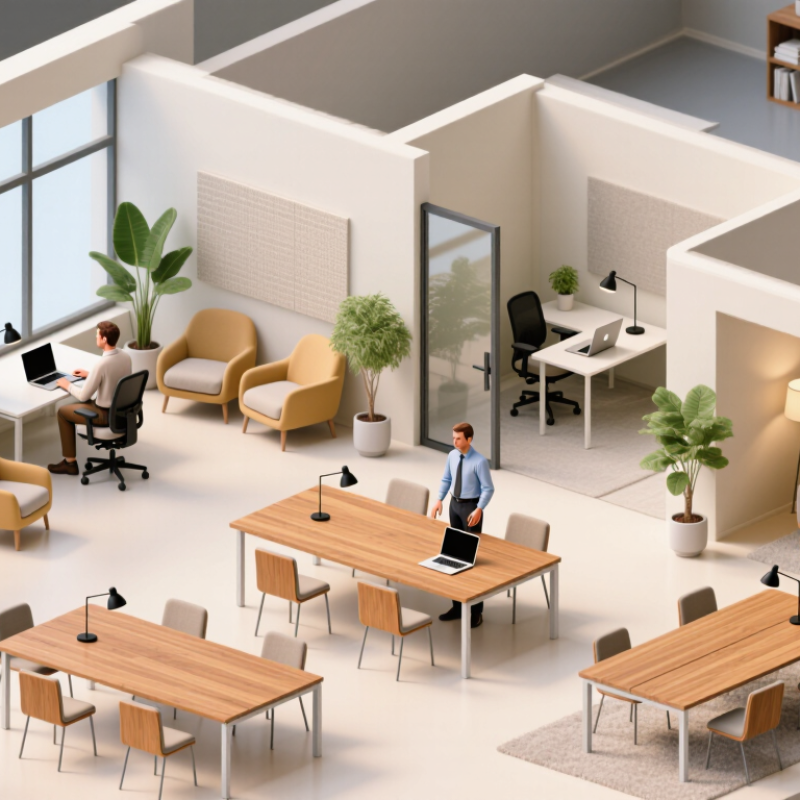
What defines office aesthetics in 2026 is not a fashionable color palette. It is how space makes work feel, sound, and function. Strong offices combine daylight, acoustic control, tactile materials, and clear spatial choice. A quiet booth, a sunlit table, and a private room can matter more than expensive décor. Gallup’s State of the Global Workplace 2024 report found that only 23% of employees were engaged worldwide. Emotional comfort is now a business concern.
Gensler’s 2024 Global Workplace Survey reveals a similar tension. Offices support collaboration and social connection, while many employees prefer home for focused work. This finding reshapes workplace aesthetics. Open plans need visual rhythm, movable screens, and acoustic zoning. Shared areas should feel inviting, not like noisy stages. Warm timber tones, matte surfaces, softer lighting, and carefully placed plants can reduce visual fatigue. Small details become visible every day.
Yet aesthetics can overpromise. A biophilic wall cannot fix poor ventilation or unfair policies. Post-occupancy feedback often exposes this gap. Employees may praise the colors, then avoid the breakout zone because conversations carry across the room. That is useful failure. In 2026, teams should measure comfort, privacy, choice, and belonging after installation. Then they should revise the plan. The best-looking office is still the one people can use without performing happiness.
In 2026, office aesthetics is increasingly defined by environments that feel natural, personal, and supportive rather than purely decorative. The evidence below highlights documented effects associated with enriched workspaces, indoor plants, and access to windows or daylight.
Evidence base: Knight and Haslam, Journal of Experimental Psychology (2010); Nieuwenhuis et al., Journal of Experimental Psychology: Applied (2014); Boubekri et al., Journal of Clinical Sleep Medicine (2014). Values represent reported effects from different studies and should not be treated as a direct ranking.
2026 Top Office Aesthetics Trends Boosting Employee Morale?
How Biophilic Design Supports Employee Well-Being
Biophilic design brings natural light, plants, timber textures, and outdoor views into daily work. It can make a Monday morning feel less mechanical. A 2015 Global Impact of Biophilic Design in the Workplace report found that natural elements were associated with 15% higher well-being, 6% greater productivity, and 15% more creativity. These figures are encouraging, but they do not prove that every office plant improves performance.
Effective design needs practical details. Place desks near windows, while reducing glare on computer screens. Use plants beside meeting areas, not only in decorative corners. Add natural textures through wood surfaces, woven panels, or stone finishes. The World Green Building Council’s Health, Wellbeing and Productivity in Offices report links better lighting, ventilation, acoustics, and thermal comfort with productivity gains of 8% to 11%. Biophilic design works best as part of that wider system.
A plant is not enough. Employees may still feel stressed under poor management or constant noise. Designers should measure comfort through staff surveys, absence patterns, and workspace observations. Some workers may also dislike strong scents, dense planting, or limited privacy. The evidence is useful, but imperfect. A greener office should support different bodies, schedules, and sensory needs. That requires regular adjustment, not a one-time renovation.
| 2026 Office Aesthetic Trend | Biophilic Design Element | Evidence-Based Data Point | Potential Employee Well-Being Benefit | Practical Workplace Application | Research Basis |
|---|---|---|---|---|---|
| Living Greenery | Indoor plants and planted work zones | 15% higher productivity was reported in a field study comparing green and lean office environments. | More positive perceptions of the workplace, improved concentration, and stronger environmental satisfaction. | Use low-maintenance plants near shared desks, collaboration areas, reception spaces, and circulation routes without obstructing daylight or ventilation. | Nieuwenhuis et al. (2014), Journal of Experimental Psychology: Applied |
| Plant-Filled Focus Areas | Plants placed within the employee field of view | 12% improvement in task performance was observed in an experiment involving plants in an otherwise windowless office environment. | Reduced visual monotony and improved perceived comfort during sustained desk work. | Position plants within normal sightlines, especially beside monitors, meeting tables, and quiet-work desks. | Lohr, Pearson-Mims, and Goodwin (1996), Journal of Environmental Horticulture |
| Natural Materials | Timber, stone, cork, rattan, wool, and organic textures | A global workplace survey covering approximately 7,600 workers across 16 countries found that access to natural elements was associated with higher reported well-being. | Warmer sensory impressions, greater perceived comfort, and a more welcoming emotional atmosphere. | Combine natural finishes with neutral colors and varied textures on walls, furniture, acoustic panels, and reception counters. | Human Spaces, The Global Impact of Biophilic Design in the Workplace (2015) |
| Daylight-First Planning | Window access, transparent partitions, and daylight distribution | Daylight is recognized in office-lighting guidance as a key contributor to visual comfort and occupant satisfaction; office illuminance recommendations commonly use approximately 500 lux for regular desk work. | Less dependence on artificial lighting, improved visual comfort, and stronger connection with outdoor environmental cues. | Place frequently occupied workstations near windows, control glare with blinds, and use glass partitions to distribute daylight deeper into the floor plan. | EN 12464-1:2021, Light and Lighting—Lighting of Work Places |
| Nature Views | Views of trees, gardens, planted terraces, or landscaped courtyards | Healthcare-environment research found that patients with a view of vegetation experienced better recovery outcomes than those viewing a brick wall, demonstrating the restorative potential of nature views. | Potential stress reduction, mental restoration, and improved emotional recovery during demanding work periods. | Protect window sightlines, place informal seating beside planted areas, and create internal garden views where exterior views are limited. | Ulrich (1984), Science, “View Through a Window May Influence Recovery from Surgery” |
| Nature-Inspired Color | Leaf green, muted blue, sand, clay, and warm wood tones | Color research consistently shows that perceived brightness, saturation, contrast, and cultural context influence emotional responses; therefore, no universal productivity percentage applies to a single office color. | Calmer visual environments, clearer zoning, and reduced sensory fatigue when colors are applied consistently. | Use low-to-moderate saturation colors for large surfaces and stronger natural accents for wayfinding, collaboration zones, and social areas. | Elliot and Maier (2014), Annual Review of Psychology, “Color Psychology: Effects of Perceiving Color on Psychological Functioning in Humans” |
| Organic Acoustic Design | Natural-fiber acoustic panels, curved forms, and sound-absorbing greenery | Open-plan office studies have linked excessive noise and lack of speech privacy with distraction and reduced perceived work performance; the impact varies by task and acoustic condition. | Better concentration, lower annoyance, and improved recovery in high-density work settings. | Use ceiling absorption, fabric-wrapped panels, planted buffers, quiet rooms, and curved layouts to reduce direct speech transmission. | Kim and de Dear (2013), Journal of Environmental Psychology, “Workspace Satisfaction: The Privacy-Communication Trade-Off in Open-Plan Offices” |
| Restorative Micro-Spaces | Small retreat areas with plants, daylight, natural textures, and outdoor sounds | Environmental psychology research identifies brief exposure to natural settings as a restorative experience, although the exact effect depends on exposure duration, design quality, and individual preference. | Short mental recovery periods, lower perceived stress, and improved readiness to resume focused work. | Create compact reset zones with comfortable seating, greenery, low visual clutter, adjustable lighting, and clear expectations for quiet use. | Kaplan and Kaplan (1989), The Experience of Nature: A Psychological Perspective |
| Flexible Indoor–Outdoor Connection | Balconies, terraces, operable windows, and planted outdoor break areas | Research on workplace environmental satisfaction shows that perceived control over environmental conditions is positively related to occupant satisfaction and comfort. | Greater autonomy, improved break quality, and stronger connection with seasonal and natural conditions. | Provide accessible outdoor seating, weather protection, shaded areas, and employee-controlled ventilation or shading where feasible. | Veitch et al. (2007), Journal of Environmental Psychology, research on environmental satisfaction and perceived control |
Note: Research findings are context-dependent. Actual outcomes may vary according to office layout, climate, lighting quality, job type, maintenance standards, accessibility, and employee preferences.
Flexible workspaces can improve morale because they respect different working rhythms. Quiet zones support concentration, while shared tables encourage quick problem-solving. A small lounge can also create informal conversations between departments.
The State of the Global Workplace 2024 report found that only 23% of employees were engaged worldwide. This figure suggests that office design cannot replace strong leadership. However, it can remove daily friction. The 2024 Global Workplace Survey found that effective workplaces provide greater choice and control over where people work. Employees need spaces for video calls, focused tasks, workshops, and social contact. Acoustic booths, movable furniture, natural light, and reliable booking systems make these choices visible. Collaboration improves when people can meet without interrupting others. Morale rises when employees feel trusted.
Tips: Offer at least three work settings. Add writable walls near project tables. Keep quiet areas genuinely quiet. Review space usage every quarter. Ask employees what feels useful, not merely attractive.
Flexible design is not a cure-all. Some teams may avoid shared areas, while others may feel isolated. Managers must watch real behavior, not assumptions. Pilot one floor for eight weeks, then compare attendance, collaboration feedback, and reported stress. The best aesthetic may be the one employees actually use.
Color, lighting, and acoustics increasingly shape how employees experience an office. Soft greens, warm neutrals, and muted blues can reduce visual fatigue. However, color psychology is not universal. Cultural meaning, job type, and personal preference still matter. The perfect palette does not exist. A practical approach uses calm base colors with small, adjustable accents. Employees might choose a brighter task zone or a quieter corner when energy drops.
Lighting requires stronger evidence than decoration alone. The World Green Building Council’s Health, Wellbeing and Productivity in Offices report associates improved lighting with productivity gains of up to 23 percent.
A study in the Journal of Clinical Sleep Medicine found that workers with windows received 173 percent more daytime light and slept 46 minutes longer.
Acoustics need equal attention. Persistent conversations, ringing phones, and hard surfaces can quietly drain concentration. Absorptive ceilings, fabric panels, and enclosed focus rooms can help. Yet excessive silence may feel uncomfortable and reduce informal connection.
Workplace designers should test sound levels during busy hours, not only during a polished inspection. Small failures reveal useful truths.
A beautiful office can still exhaust people.
How Sustainable Technology Transforms Modern Office Design
Modern offices are moving beyond attractive furniture and polished walls. Sustainable technology now shapes comfort, energy use, and daily employee experience. Smart lighting adjusts brightness near windows, while occupancy sensors reduce wasted electricity in empty meeting rooms. These small changes make spaces feel responsive rather than mechanical.
Material choices matter too.
Recycled acoustic panels can soften noisy conversations without making rooms feel closed. Low-energy glass brings daylight deeper into the floor plan. Indoor air monitors display carbon dioxide levels, temperature, and humidity on simple screens. Facilities teams can use this data to improve ventilation before employees complain about tiredness or headaches. Comfortable air is not decorative. It affects concentration.
Technology is not magic.
A poorly designed system may confuse users or create privacy concerns. Employees may dislike sensors if nobody explains what they measure. Sustainable features also need regular maintenance, which many projects underestimate. A dashboard showing energy savings means little when filters remain blocked or controls are ignored.
Post-occupancy reviews often reveal these gaps. Designers should invite employees to test lighting scenes, furniture layouts, and climate settings before final installation. This creates practical feedback, not assumptions.
A quieter workspace may raise morale, but an overly silent office can feel unnatural. The strongest designs leave room for adjustment, human choice, and occasional imperfection.
They give employees more control over their daily environment. Quiet zones support focus, while shared tables help teams solve problems quickly. Trust matters.
Offer at least three settings. Include quiet desks, shared project tables, private call booths, and a small social lounge. Different tasks need different spaces.
Writable walls near project tables make ideas visible. Shared areas encourage brief conversations between departments. Booking systems help teams meet without disturbing focused colleagues.
No, design is not a cure-all. One global report found only 23% of employees were engaged. Strong leadership still shapes motivation and trust.
Smart lighting adjusts brightness near windows. Occupancy sensors reduce wasted electricity in empty rooms. Air monitors can show carbon dioxide, temperature, and humidity levels.
Recycled acoustic panels can soften nearby conversations. Low-energy glass can bring daylight deeper into the floor plan. Comfortable air supports attention.
Sensors may raise privacy concerns when nobody explains their purpose. Complicated controls can frustrate employees. Technology needs maintenance, not just installation.
Pilot one floor for eight weeks. Compare attendance, collaboration feedback, and reported stress. Ask employees what they actually use, not what looks attractive.
Watch real behavior in the space. Some employees may avoid shared areas, while others may feel isolated. A quiet office is not always a comfortable office.
Review usage every quarter. Check booking patterns, noise complaints, and unused furniture. The best design may be imperfect but genuinely useful.
In 2026, office aesthetics will be defined by thoughtful spaces that balance visual appeal, comfort, functionality, and employee well-being. Natural materials, indoor plants, daylight, and views of nature can create a biophilic atmosphere that helps reduce stress and support focus. Flexible workspaces, including quiet zones, collaborative areas, and adaptable seating, can meet different working preferences while encouraging communication and teamwork. Why does office aesthetics impact employee morale? Because the design of a workplace influences how employees feel, behave, and connect with their daily responsibilities.
Color, lighting, and acoustics will also shape the overall workplace experience. Calm colors may promote concentration, while carefully chosen accents can add energy and creativity. Adjustable lighting and effective sound management can improve comfort and reduce distractions. At the same time, sustainable technology, energy-efficient systems, smart controls, and responsibly sourced materials will help create modern offices that support both people and the environment. Together, these trends can make workplaces more welcoming, productive, and motivating.
Vant Furniture